If your plumber just told you that your sewer line needs to be replaced, the first question that probably came to mind was not about the cost or the method. It was probably: how long is this actually going to take?
That is a completely fair thing to wonder. A sewer line replacement affects your water usage, your yard, your schedule, and sometimes your ability to stay in the house. Knowing the realistic timeline upfront helps you plan around it rather than getting hit with surprises midway through the job.
The short answer is that most sewer line replacements take anywhere from 1 to 5 days, depending on the method used, the condition of the pipe, and the specific circumstances of your property. But that range covers a lot of ground, and what pushes a job toward one end or the other matters a great deal.
This guide breaks down exactly what to expect, step by step, so you can go into the process fully informed.
Average Sewer Line Replacement Timeline at a Glance
Before diving into the details, here is a quick reference for how long different types of sewer line work typically take:
| Type of Work | Typical Timeframe |
|---|---|
| Minor sewer repair | A few hours to 1 day |
| Trenchless sewer replacement (pipe bursting or lining) | 1 to 3 days |
| Traditional excavation replacement | 3 to 5 days |
| Complex or deep line replacement | 4 to 8 days |
| Sewer line under street or sidewalk | Up to 1 week or more |
These are general benchmarks based on standard residential jobs. Your actual timeline could be shorter or longer depending on factors we will cover in detail below.
Sewer Line Replacement Timeline by Method
The method your contractor uses is the single biggest factor that determines how quickly the job gets done. There are two main approaches to sewer line replacement, and they differ dramatically in terms of time, cost, and disruption to your property.
Trenchless Sewer Replacement (1 to 3 Days)
Trenchless technology has changed the way most sewer line replacement projects are handled, particularly in residential settings. Instead of digging up a long trench across your yard, a trenchless approach requires only one or two small access points. The work happens mostly underground, which is why it is so much faster.
There are two common trenchless techniques:
Pipe Bursting: A new pipe is pulled through the old damaged pipe, which fractures and breaks outward as the new line moves through. This works well when the existing pipe has not completely collapsed and the surrounding soil can absorb the displaced fragments. Most pipe bursting jobs are completed in one to two days.
Pipe Lining (CIPP – Cured-in-Place Pipe): A flexible liner coated with epoxy resin is inserted into the existing pipe and inflated, then left to cure and harden. Once it sets, it creates a smooth new pipe wall inside the old one. The curing process can take several hours on its own, but the full job usually wraps up within one to three days.
If your property has a clear line of access and the damage is localized, trenchless is almost always the faster route. It also tends to cause far less disruption to landscaping, concrete, and structures above the pipe. Our sewer line replacement service covers both trenchless and traditional methods, so the right approach gets selected based on what your specific situation actually needs.
Traditional Excavation (3 to 5 Days)
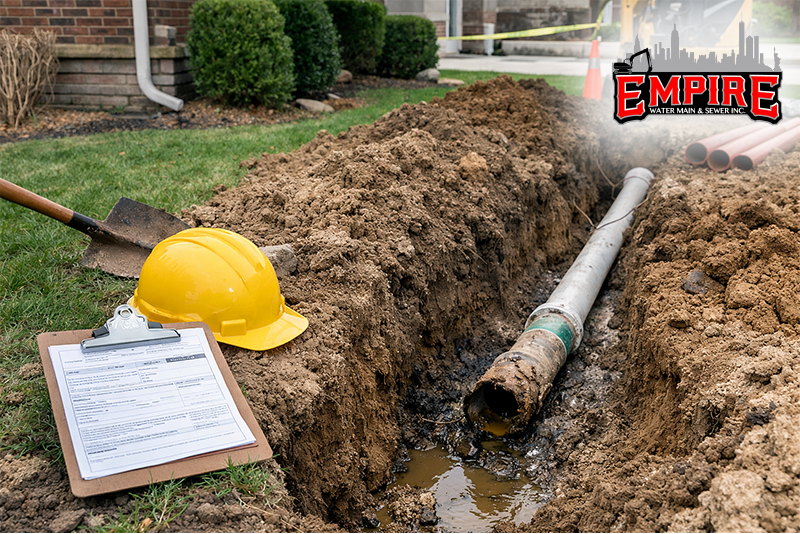
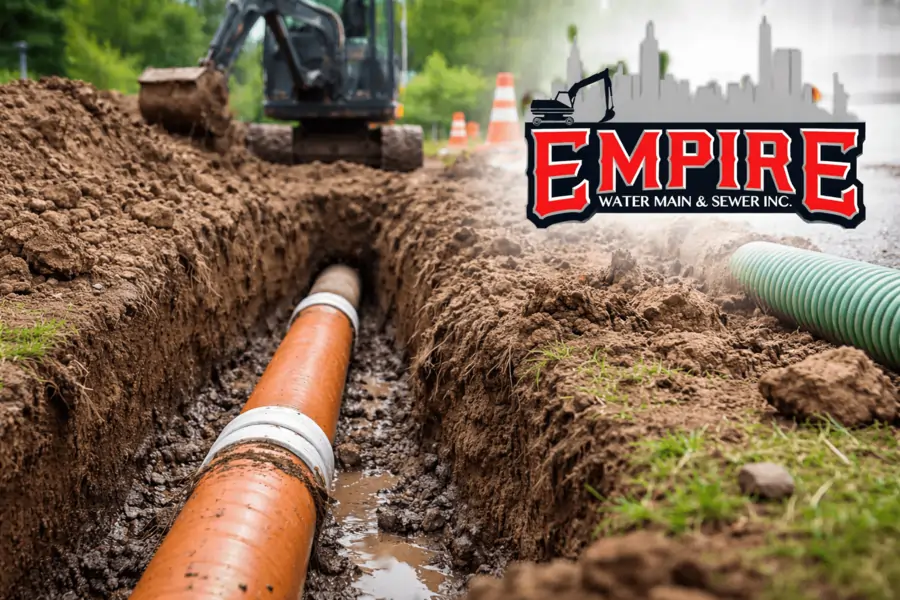
Traditional sewer line replacement involves physically digging a trench along the path of the pipe, removing the old pipe, installing a new one, and then backfilling and restoring the surface. It is more labor-intensive and takes considerably more time.
That said, traditional excavation is not always the slower option by choice. In some cases, the condition of the pipe or the layout of the property simply rules out trenchless methods. If the pipe has completely collapsed, if tree roots have caused severe structural damage, or if the line runs through an area with dense underground utility lines, excavation may be the only practical option.
A typical traditional replacement on a standard residential lot takes three to five days from start to finish. That includes excavation, pipe removal, new pipe installation, inspection, backfilling, and surface restoration.
Step-by-Step: What Happens During a Sewer Line Replacement
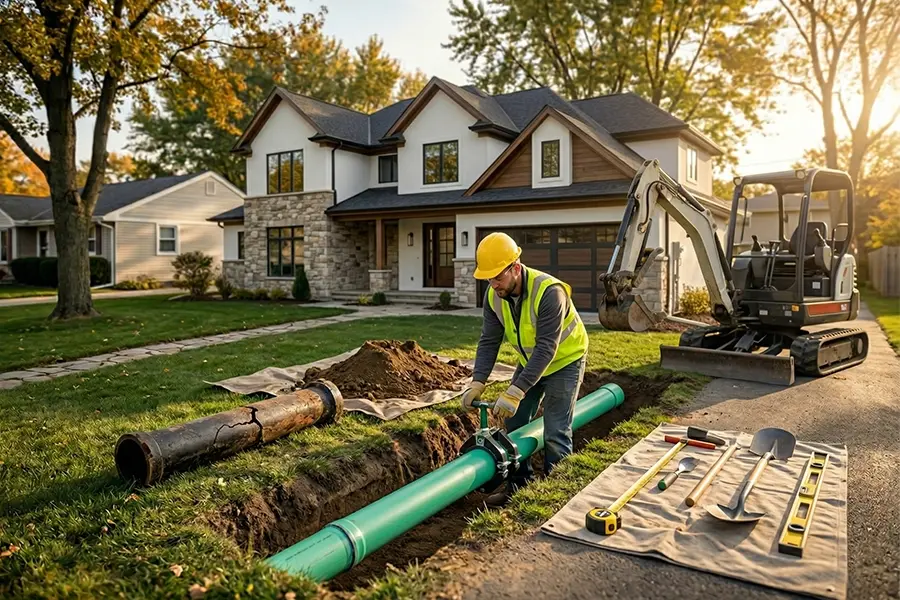
Understanding the actual process helps you see why the job takes as long as it does. Each step serves a purpose, and skipping or rushing any of them tends to create bigger problems down the road.
Step 1 — Camera Inspection and Diagnosis
Before any work begins, a licensed plumber will run a sewer camera through the line to assess the extent and location of the damage. This step determines which repair method is appropriate and gives the crew a clear picture of what they are dealing with. It usually takes one to two hours.
Step 2 — Permits and Scheduling
Depending on your municipality, replacing a sewer line requires pulling permits, especially if the work involves the public right-of-way or a street connection. If you have received a DEP notice requiring repair or replacement, the permit process is often already initiated. Permit timelines vary by location. In some areas, same-day or next-day approvals are common. In others, the wait can add two to three days to the schedule.
Step 3 — Setup and Excavation (or Access Point Preparation)
For traditional jobs, the crew marks utility lines, sets up equipment, and begins digging the trench. For trenchless jobs, they prepare the access pits at each end of the repair section. This stage can take anywhere from a few hours to a full day depending on the depth of the pipe and the soil conditions.
Step 4 — Pipe Removal and Installation
The damaged pipe is removed (or lined, in the case of CIPP), and the new pipe is put in place. This is typically the most time-consuming part of the job. Proper installation means the pipe needs to follow the correct slope for drainage and connect cleanly to both the house and the city main.
Step 5 — Inspection and Testing
Once the new pipe is installed, the system gets tested. Water flow testing confirms the line drains properly, and a post-installation camera inspection verifies the joints are sealed and the pipe is aligned correctly. Some municipalities also require a city inspector to sign off before backfilling begins.
Step 6 — Backfilling and Restoration
The trench is filled in layers and compacted to prevent settling. If asphalt, concrete, or paving was disturbed, that surface gets patched. Landscaping restoration may take additional time depending on how much was disturbed and what the original surface was.
Factors That Affect How Long Sewer Line Replacement Takes
No two sewer line replacement jobs are exactly the same. Here are the variables that most directly influence how long the project will take.
Pipe Depth
Deeper pipes require more excavation time and more extensive shoring to keep the trench walls stable. A pipe buried four feet down is significantly faster to access than one buried ten or twelve feet.
Pipe Length
Longer sewer lines mean more material to remove, more pipe to install, and more trench to backfill. A short lateral line of 20 feet is a very different job from a 100-foot line running to the street.
Pipe Material
Older clay and cast iron pipes can be more difficult and time-consuming to remove than PVC. Cast iron in particular can be heavy and brittle, making excavation slower and more careful work. The material also affects whether trenchless methods are viable.
Extent of Damage
A localized crack or a short section of collapsed pipe is a much faster fix than a line that has degraded along its entire length. The scope of the damage is often not fully known until the camera inspection is completed.
Soil Conditions
Rocky or heavily compacted soil slows excavation considerably. Sandy or loose soil can also complicate things, since trench walls may need extra support to prevent cave-ins. Clay soil holds a trench wall well but can be harder to dig.
Accessibility
If the sewer line runs under a driveway, a concrete patio, or landscaping with mature trees, the crew has to work around those obstacles. That means slower progress, more careful cutting, and sometimes additional restoration work once the pipe is replaced.
Tree Root Intrusion
Tree roots that have grown into the pipe can extend well beyond the visible damage point. In severe cases, removing root-damaged sections of pipe takes extra time, and the roots themselves have to be cleared before the new pipe goes in.
Permits and City Inspections
As mentioned, permit timing varies. If street excavation is required, traffic control permits and additional city oversight can add meaningful time to the schedule. This is one of the most common sources of unexpected delays on sewer replacement projects.
Weather
Excavation work does not go well in heavy rain, which softens soil, destabilizes trench walls, and creates muddy working conditions. Projects in winter months can also be delayed by frozen ground. Most contractors plan around weather when possible, but it is not always predictable.
Utility Line Conflicts
Gas, electric, water, and cable lines all run underground, often in the same general area as sewer pipes. If the sewer line runs close to or crosses another utility line, the crew has to work carefully around it, which slows the job down.
Can a Sewer Line Be Replaced in One Day?
Yes, in some situations. A one-day sewer line replacement is realistic when all of the following are true: the job uses a trenchless method, the pipe is not deeply buried, the line is relatively short, permits have already been secured, and no major obstacles are in the way.
Simple pipe lining jobs on short lateral lines are sometimes completed in a single workday, including the curing time. Pipe bursting on accessible lines can also wrap up within eight to ten hours.
However, a one-day timeline is not the norm for most residential properties. It is the best-case scenario for a straightforward job, not a baseline expectation for every project.
If your situation is more complex, such as a long line, deep burial, concrete obstruction, or permit delays, planning for at least two to three days is more realistic and less stressful.
Partial vs Full Sewer Line Replacement Time
Not every sewer line problem requires a full replacement from the house to the street. In some cases, only a section of the line is damaged, and a partial replacement is all that is needed.
Partial Sewer Line Replacement: When only a specific section of the pipe is damaged, a targeted repair or partial replacement can often be completed in one to three days. The crew focuses on the affected section, which means less excavation and faster installation.
Full Sewer Line Replacement: Replacing the entire lateral from the foundation of the house to the city main is a bigger undertaking. Full replacements typically take three to seven days, depending on the length of the line and the method used.
The distinction between needing a partial repair or a full replacement is usually determined during the camera inspection. If the damage is isolated, a targeted fix may be all that is required. If the pipe shows widespread deterioration across its length, a full replacement is usually the smarter long-term investment. Our team handles both options through our sewer line repair and full replacement services.
What Delays Sewer Line Replacement?
Even well-planned sewer replacement projects can run into delays. Knowing the most common causes helps you set realistic expectations and avoid frustration if the project runs a day or two longer than originally estimated.
Permit Processing: Some municipalities move quickly on permit approvals. Others take several business days, especially if street work is involved. If your contractor did not pull permits ahead of time or did not factor in permit lead time, this can push the start date back.
Unexpected Pipe Damage: Camera inspections give a good picture of the line’s condition, but sometimes the full extent of the damage only becomes clear once the trench is open. If the crew uncovers additional deteriorated sections or structural issues that were not visible on camera, additional repair time gets added to the schedule.
Underground Utility Conflicts: Discovering that the sewer line runs in close proximity to a gas or electric line that was not fully mapped can stop work temporarily while the utility company is notified and a safe plan is established.
Weather: Rain, ice, or extreme heat can pause outdoor excavation work. Most contractors build buffer days into their schedule during unpredictable weather seasons, but a stretch of bad weather can still extend a project.
Equipment Availability: Specialized trenchless equipment is not always immediately available, particularly during busy seasons. If there is a backlog of jobs ahead of yours, the start date may be delayed even after permits are in hand.
If your situation is urgent, such as a completely failed sewer line causing backups in the house, our emergency sewer repair service can often respond faster and prioritize the job accordingly.
What to Expect While the Work Is Being Done
Living through a sewer line replacement is not exactly comfortable, but knowing what to expect makes it much easier to manage.
Water Usage Restrictions: While the sewer line is open or being replaced, you will likely be asked to avoid running water in the house or to significantly limit its use. This means no dishwasher, no laundry, and minimal toilet flushing during working hours. In some cases, especially for trenchless jobs, service can be restored each evening so the disruption is limited to daytime hours.
Noise and Vibration: Excavation equipment is loud. Jackhammers, excavators, and compaction equipment create significant noise and ground vibration. If you work from home or have young children or pets, planning to be elsewhere during the noisiest phases of the work is worth considering.
Property Disruption: Even with trenchless methods, some portion of your yard or surface area will be disturbed. For traditional excavation, expect a visible trench and a mound of excavated soil for the duration of the project. Most crews do a cleanup pass at the end of each day, but the yard will not look the same until restoration is complete.
Odors: Opening a sewer line exposes gases and waste material that produce strong odors. This is temporary and goes away once the line is sealed and backfilled, but it is worth knowing in advance.
Cost vs Time Trade-Off: Trenchless vs Traditional
One of the most common decisions homeowners face is whether to choose a trenchless method or go with traditional excavation. Speed and cost are closely related in this decision.
Trenchless methods are faster, less disruptive, and often preserve landscaping and surface features that would need to be torn up and replaced with traditional digging. However, they typically cost more upfront due to the specialized equipment and expertise required.
Traditional excavation takes longer and causes more surface disruption, but it is generally less expensive per linear foot of pipe, especially on longer runs. The savings in labor cost can be offset by the additional time, mess, and surface restoration expenses.
For a full cost breakdown and current pricing estimates, our guide on how much it costs to replace a sewer line goes into detail on what drives the numbers and what you can realistically expect to pay in this area.
The right choice depends on your property layout, budget, and how much disruption you can tolerate. A licensed contractor should evaluate the specific line before recommending one method over the other.
Frequently Asked Questions
How long does it take to replace a sewer pipe?
Most residential sewer pipe replacements take one to five days from start to finish. Trenchless methods on accessible lines can sometimes be completed in a single day, while traditional excavation on longer or deeper lines typically takes three to five days. Complex jobs involving street excavation, deep burial, or significant permit requirements can run up to a week or more.
Can trenchless sewer replacement be done in one day?
Yes, under the right conditions. Trenchless replacement using pipe bursting or CIPP lining can be completed in one day when the line is short, the access is clear, permits are already in place, and no significant underground obstacles are present. It is not guaranteed for every job, but it is a realistic outcome for straightforward projects.
Do you need permits to replace a sewer line?
In most jurisdictions, yes. Replacing a main sewer line typically requires a permit from the local building or public works department, particularly if the work connects to the city main or involves opening a public right-of-way. If you have received a DEP notice or city compliance order, the permitting process may already be underway. Working with a licensed contractor ensures the permits are handled correctly and the work passes inspection.
Will homeowners insurance cover sewer line replacement?
Standard homeowners insurance policies generally do not cover sewer line replacement that results from normal aging or wear and tear. Some policies cover sudden or accidental damage, and separate sewer line insurance riders or home warranty plans may provide additional coverage. Whether the coverage is actually worth the cost depends heavily on the age and condition of your pipe and the terms of the specific policy. We cover this topic in detail in our guide on whether sewer line insurance is worth it.
How long does sewer repair take compared to full replacement?
A targeted sewer line repair on a localized problem, such as sealing a crack or relining a short damaged section, typically takes a few hours to one full day. A full replacement takes considerably longer, usually three to five days for traditional methods or one to three days for trenchless. If the camera inspection shows that the damage is limited to a specific spot, a repair is often the faster and more cost-effective path.
How often does a main sewer line need to be replaced?
A well-maintained sewer line made from modern PVC pipe can last 50 years or more. Older clay or cast iron pipes, which are common in homes built before the 1970s, may start showing significant wear after 40 to 50 years and can deteriorate faster if they have been subject to heavy root intrusion or ground movement. If your home is older and you have not had a camera inspection in several years, it is worth scheduling one proactively rather than waiting for a failure.
The Bottom Line
Replacing a sewer line is one of the more significant plumbing projects a homeowner can face, but it is also one that goes smoothly when handled by an experienced team with a clear plan. The timeline ranges from a single day for straightforward trenchless jobs to a full week for complex traditional excavation projects, and several factors in between determine where your specific job lands on that spectrum.
The best thing you can do before work begins is have a direct conversation with your contractor about the expected timeline, what might cause it to extend, and what your daily routine will look like while the work is underway. A good contractor will give you honest answers to all of those questions before the first shovel hits the ground.
If you are dealing with a sewer line issue right now and want a clear assessment of your situation and timeline, contact our team to schedule a camera inspection and get a straightforward estimate.