Average Sewer Line Replacement Cost (2026 Data)
| Cost Category | Typical Range |
| National average (most residential projects) | $3,000 to $10,000 |
| Low end (minor repairs, short sections) | $650 to $2,500 |
| High end (complex, full-length, under slab) | $15,000 to $20,000+ |
| Cost per linear foot (all methods) | $50 to $250 per foot |
The average cost to replace a sewer line in 2026 falls between $3,000 and $10,000 for most residential sewer line replacement projects. Costs can range as low as $650 for localized repairs to over $20,000 for complex full-length replacements, with most homeowners paying somewhere between $50 and $250 per linear foot depending on method, pipe material, and site conditions.
Sewer Line Replacement Cost Calculator
Estimate your sewer line replacement cost instantly
📞 Call Now: 718-715-4862Sewer Line Replacement Cost Per Foot
Sewer line replacement is almost always priced by linear foot. The exact rate depends on the replacement method used, the type of pipe material selected, and the specific conditions at your property. Here is what the numbers typically look like across different project sizes:
- 50-foot sewer line replacement: approximately $2,500 to $12,500, depending on depth and method chosen.
- 100-foot run: anywhere from $5,000 to $25,000, particularly if traditional excavation is involved and surface restoration is required.
- 150-foot replacement: at the higher per-foot range in complex urban environments, total costs can push well past $30,000.
Longer sewer lines not only require more pipe material and more labor hours, they also tend to expose more variables along the way. A crew that starts digging at one end may uncover root intrusion, a collapsed section, or an unexpected bend in the existing sewer line partway through the project. These discoveries add time and cost that are genuinely difficult to predict without a camera inspection beforehand.
Sewer Line Replacement Cost Breakdown
Labor Costs
Labor is consistently the largest line item in any sewer line replacement project, often accounting for 50% or more of the total cost. Plumbing crews handle everything from site assessment and excavation through pipe removal, installation, and backfill. In most markets, labor runs between $75 and $200 per hour per crew member. On a full residential sewer line replacement, those hours accumulate quickly.
Materials (PVC, ABS, Cast Iron)
The pipe material selected affects both upfront cost and long-term performance. PVC is the most commonly installed choice today and is reasonably priced, typically running $1 to $5 per linear foot for the material alone. ABS pipe is comparable in price and is commonly used in colder climates. Cast iron is considerably more expensive but delivers excellent durability and sound dampening where that quality matters. Material costs on a full replacement project typically range from $1,000 to $5,000 depending on pipe type and total project length.
Equipment and Excavation
Traditional sewer line replacement requires heavy equipment. Backhoes, trenching machines, and in some cases concrete cutting tools all factor into the final cost. Equipment rental and operator fees typically add $500 to $3,000 to a project. If the sewer line runs beneath a driveway, patio, or another hardscape surface, excavation costs climb further.
Permits and Inspection Costs
Most municipalities require a permit before any sewer line work begins. Permit fees vary by location but generally run between $200 and $1,000. Some cities also charge separate inspection fees to verify the work meets local plumbing codes before the trench is backfilled. Skipping the permit process is never a smart shortcut. Unpermitted sewer line work creates serious legal and financial complications at the point of property sale.
Yard, Driveway, and Landscaping Repair
After a traditional excavation replacement, the yard, driveway, or landscaping above the trench path needs to be restored. This is a cost many homeowners underestimate when they first see a replacement quote. Lawn reseeding and soil grading adds a few hundred dollars. Driveway patching or repaving can add $1,000 to $5,000 depending on the material and area affected. Replacing garden beds, retaining walls, or established plantings can push restoration costs even higher on certain properties.
Factors That Affect Sewer Line Replacement Cost
Length of the Sewer Line
The longer the sewer line, the more materials, labor hours, and equipment time the project requires. This is the single most predictable cost driver in any replacement project. Before getting estimates, knowing the approximate distance your sewer line runs from your home to the municipal connection at the street gives contractors a useful starting point.
Depth of the Pipe
Sewer lines in colder climates are often buried 4 to 6 feet underground or deeper to sit below the frost line. Deeper pipes require more excavation, take considerably longer to access safely, and increase the complexity of the work. Every additional foot of burial depth adds to the overall project cost.
Replacement Method Used
The method chosen has a direct and significant impact on the total price. Traditional open-cut excavation may show a lower per-foot rate on paper, but it carries substantial surface restoration costs that trenchless methods avoid. Trenchless approaches like pipe bursting or cured-in-place pipe (CIPP) lining require specialized equipment and expertise, which is reflected in their per-foot rates, but the savings on landscaping and driveway repair often more than compensate for that difference.
Pipe Material Type
As covered in the cost breakdown above, PVC, ABS, and cast iron all carry different price points. In older homes, existing clay pipes or Orangeburg pipes are the most common materials being replaced, and those projects sometimes require additional site preparation before new pipe can go in.
Soil Condition and Obstacles
Rocky soil, high water tables, and heavy clay all increase excavation time and difficulty. Tree root intrusion that has compromised the pipe over a long stretch requires removal before the new sewer line can be installed. When the sewer line passes beneath a sidewalk, driveway, or concrete foundation, those structural elements add significant cost and complexity to the project.
Location (Urban vs Rural)
Labor rates in urban markets are consistently higher than in rural areas. City projects also tend to involve more permit requirements, closer utility line proximity, and tighter physical access constraints that all affect the final bill. Rural replacements can be more straightforward logistically, though longer distances from the home to the municipal sewer system sometimes offset that advantage.
Accessibility of the Sewer Line
A sewer line running directly beneath an open lawn is far easier and cheaper to access than one buried under a finished basement, a concrete driveway, or a home addition. Limited access means more prep work, more restoration work, and in some cases specialized equipment to navigate the constraints of the site.
Trenchless vs Traditional Sewer Line Replacement Cost
Trenchless Sewer Line Replacement
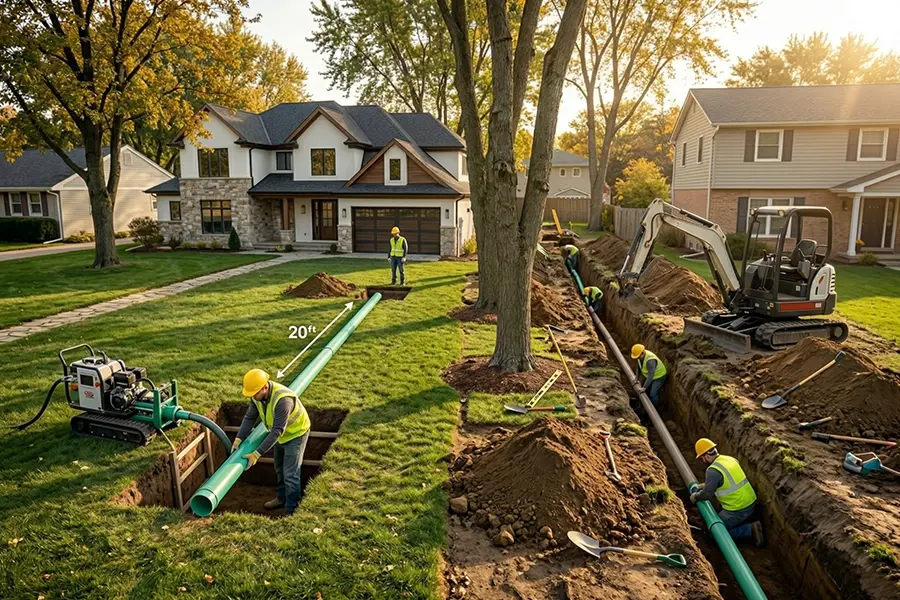
Trenchless sewer replacement covers two main methods, each suited to different types of damage and pipe conditions.
Pipe bursting involves pulling a new sewer pipe through the existing damaged line while simultaneously fracturing the old pipe outward into the surrounding soil. It is an excellent option when the existing pipe path is still usable and the surrounding soil can absorb the displaced debris from the old pipe.
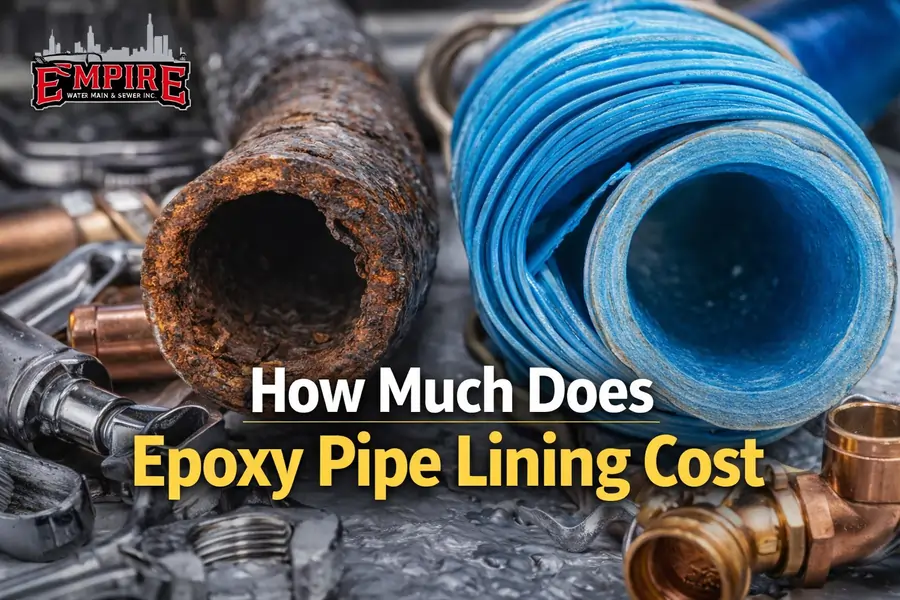
CIPP lining (cured-in-place pipe) involves pulling a resin-saturated liner through the existing sewer pipe and curing it in place with heat or UV light to form a new pipe structure within the old one. This approach works particularly well when the existing pipe is mostly intact but corroded, cracked, or suffering from root intrusion that has not caused a full collapse.
Both trenchless methods typically cost between $60 and $250 per linear foot. The higher per-foot cost reflects specialized equipment and labor, but the savings on surface restoration frequently make trenchless the smarter overall investment when conditions allow it.
Traditional Excavation Method
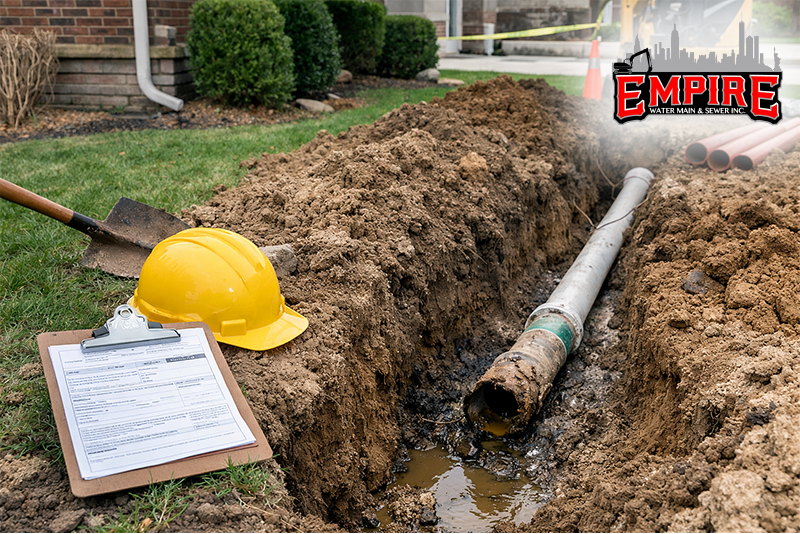
Traditional open-cut excavation involves digging a trench along the full length of the damaged sewer line, removing the old pipe completely, and installing new pipe before backfilling. This remains the standard approach for severely collapsed sewer lines, pipes in very poor structural condition, or situations where the old pipe path cannot be reliably followed by trenchless equipment.
Per-foot costs for traditional excavation typically range from $50 to $250. However, when surface restoration, permit fees, and unexpected obstacles encountered during the dig are included, the total cost of a traditional replacement can easily match or exceed a trenchless approach on the same project.
Cost Comparison Table
| Method | Cost Per Linear Foot | Surface Disruption | Best Suited For |
| Pipe Bursting | $80 to $250/ft | Minimal | Damaged but structurally intact pipe path |
| CIPP Lining | $60 to $200/ft | Minimal | Corroded or cracked pipes with solid structure |
| Traditional Excavation | $50 to $250/ft | Extensive | Collapsed or severely deteriorated pipes |
Sewer Line Repair vs Replacement (Which Is Cheaper?)
This is one of the most important questions homeowners face when they learn their sewer line has a problem, and the answer is not always straightforward.
Sewer line repair costs generally fall between $150 and $3,800 depending on the nature of the damage and how much of the line needs to be addressed. A localized crack, a minor root intrusion that has not compromised a large section of pipe, or a damaged joint in an otherwise sound line can often be repaired without replacing the entire run. In those situations, repair is clearly the more economical path.
But repair is not always sufficient. If your sewer pipe is made of clay or Orangeburg, is more than 40 years old, has multiple points of damage distributed along its length, or has experienced a structural collapse across a significant portion of its run, repair costs can start to approach or exceed the cost of full sewer line replacement. At that point, replacing the entire line makes more financial sense because it eliminates the ongoing cycle of repeated repairs.
A sewer camera inspection is the only reliable way to know which path is right for your specific situation. Our sewer line repair service can assess the exact condition of your existing pipe and give you an honest recommendation before any work is committed to.
Signs You Need Sewer Line Replacement
Some sewer line problems announce themselves suddenly and loudly. Others develop gradually over months or even years before they become impossible to ignore. Here are the warning signs that typically indicate replacement rather than simple repair:
- Persistent slow drains throughout the house: When multiple fixtures are draining slowly at the same time, the problem is in the main sewer line itself, not a single localized clog.
- Recurring sewage backups: A backup that happens once might be an isolated incident. Backups that keep returning even after clearing are a reliable sign of a structural issue in the sewer pipe that will not resolve on its own.
- Foul sewage odors inside or around the home: A healthy sewer system is fully sealed. Persistent odors mean a crack, a joint failure, or a breach somewhere in the pipe that is allowing sewer gas to escape.
- Mold growth or unexplained foundation cracks: A leaking sewer line beneath a slab can saturate surrounding soil, introduce moisture into the structure, and in severe cases, begin to undermine the foundation itself.
- Unusually lush or green patches in the yard: Sewage acts as a natural fertilizer. A section of lawn that is noticeably greener, wetter, or lusher than the rest is a classic sign of an underground sewer line leak.
Sewer Line Inspection Cost and Process
Before any replacement work is scheduled, a camera inspection is the essential first step. The cost of a professional sewer camera inspection typically runs between $150 and $500 depending on your location and the total length of the line.
During the inspection, a licensed plumber threads a waterproof camera on a flexible cable through the sewer line. The camera transmits live video to a monitor, allowing the technician to see exactly where damage exists, what type of damage it is, and how far along the line the problem extends. A thorough inspection report includes recorded footage and precise location markers for any issues found.
That upfront inspection cost is almost always money well spent. It tells you whether the situation calls for repair or full sewer line replacement, which method will work best given your pipe's condition and location, and whether any additional complications like root intrusion or a collapsed section will affect the project scope and total cost. Without that information, you are essentially working from a guess rather than a plan.
Additional Costs to Consider
A sewer line replacement project sometimes involves costs that go beyond the pipe work itself. Here are the most common additions homeowners should be prepared for:
- Tree root removal: When root intrusion contributed to the pipe failure, the roots may need to be cleared from the surrounding soil before or during the replacement. Depending on the extent of the root system, this adds $300 to $1,500 to the project.
- Under-slab sewer line replacement: When the damaged section runs beneath a concrete slab foundation, costs increase substantially. Concrete cutting and removal before work begins, followed by slab restoration afterward, typically adds $3,000 to $10,000 or more to the total project cost.
- Basement sewer line work: Replacing sewer lines that run through an interior basement requires jackhammering concrete floors, which adds both cost and restoration work to the overall scope.
- Emergency repair costs: Active sewage backup or flooding requires immediate response. Our emergency sewer and water main repair service is available for urgent situations, though emergency calls outside normal business hours typically carry a premium of 25% to 50% above standard rates.
- Municipal connection fees: Some jurisdictions require a fee paid to the city or utility when reconnecting a sewer line to the municipal system. These fees range from a few hundred to several thousand dollars depending on local requirements.
Cost to Replace a Sewer Line From House to Street
The sewer line running from your home to the municipal sewer main at the street is known as the sewer lateral. This is typically the homeowner's financial responsibility from the property line to the house connection, and in many municipalities, the homeowner is responsible all the way to the tap at the municipal main.
Replacing the full lateral from house to street is typically the most expensive residential sewer replacement project because it covers the greatest distance and often requires excavating through established landscaping, driveways, or other hardscape surfaces along the route.
In most cases, a full lateral replacement from house to street costs between $4,000 and $15,000 or more, depending on total distance, method used, depth of burial, and any obstacles along the route.
Our sewer line replacement service handles full lateral replacements and provides detailed written estimates before any work begins, so you have a complete picture of cost before committing to the project.
It is also worth knowing that the section of sewer line on public property, from the municipal tap to the city main, is the utility's responsibility to maintain and replace. If the source of a backup problem turns out to be in the city-owned main rather than in your lateral, that repair falls on the utility, not on you as the homeowner.
Does Homeowners Insurance Cover Sewer Line Replacement?
This is a question that catches a lot of homeowners off guard, usually at the worst possible moment.
Standard homeowners insurance policies do not typically cover sewer line replacement costs when the damage results from normal wear and tear, age-related deterioration, or gradual root intrusion. These are classified as maintenance issues that the homeowner is expected to manage proactively over the life of the home.
There are situations where coverage does apply. If a sudden, covered event, such as a tree falling directly onto the line, or certain types of accidental physical damage, is the verifiable cause of the failure, your policy may provide some protection. The details vary significantly from one policy and one insurer to the next.
Sewer backup endorsements are separate add-on riders that can be purchased to supplement a standard homeowners policy. These endorsements typically cover cleanup costs and some repairs related to sewage backup events, though they are not always comprehensive enough to cover full lateral replacement.
Our detailed post on sewer line insurance breaks down exactly what standard policies do and do not cover and helps you evaluate whether adding sewer backup protection makes financial sense for your specific home and neighborhood.
Does Replacing a Sewer Line Increase Home Value?
A brand new sewer line is not the kind of upgrade that photographs well or impresses guests on a tour, but it absolutely affects home value in ways that matter to serious buyers and informed real estate professionals.
From a return on investment standpoint, a sewer line replacement protects and preserves everything above it. A home with a documented, recently replaced sewer line enters the sales process with a meaningful advantage because buyers and their inspectors know the largest underground plumbing component has been addressed and is in excellent condition.
Homes with known or suspected sewer line issues regularly see price reductions, delayed closings, or deals that fall apart entirely when inspection reports surface the problem. Proactively replacing a failing sewer line before listing removes that risk entirely and eliminates a common negotiation pressure point.
Real estate professionals consistently report that documented plumbing system upgrades, sewer line work included, give buyers greater confidence and reduce friction through the inspection and negotiation process. It may not appear on a comparable sales analysis the same way a kitchen remodel does, but it is the kind of infrastructure improvement that serious buyers notice and value.
How to Save Money on Sewer Line Replacement
Sewer line replacement is a significant expense, but there are legitimate strategies for keeping the total cost as manageable as possible:
- Get multiple quotes from licensed plumbers: Pricing for the same scope of work can vary by 20% to 40% between contractors in the same market. Always compare bids based on identical project scope so you are making an honest comparison.
- Choose trenchless methods when conditions allow: The per-foot rate may be higher, but savings on surface restoration, landscaping repair, and driveway replacement frequently more than offset that difference on projects where trenchless is a viable option.
- Schedule a camera inspection early: Catching a sewer line problem while it is still in the repair stage rather than full replacement territory can save thousands of dollars. A $300 inspection that leads to a $1,500 spot repair is a dramatically better outcome than a $10,000 emergency replacement.
- Check for local rebates or utility programs: Some municipalities offer financial assistance or cost-sharing programs for homeowners replacing aging sewer laterals, particularly in areas working to reduce infiltration into the municipal sewer system. A quick call to your local utility is always worth making.
- Avoid emergency service calls when possible: Sewer line work scheduled during normal business hours is typically 25% to 50% less expensive than after-hours or weekend emergency response. If a situation allows any scheduling flexibility, use it.
DIY Sewer Line Repair vs Hiring a Professional
This needs to be stated plainly: sewer line replacement is not a DIY project for homeowners. Unlike clearing a slow drain or replacing a faucet cartridge, sewer line work involves heavy excavation equipment, specialized pipe materials, municipal permits, and in virtually every jurisdiction, a licensed master plumber to sign off on the completed work.
Attempting to replace a sewer line without the required licensing in most states is illegal and carries real consequences, including fines, mandatory work stoppage, and requirements to have the job redone by a licensed contractor at full cost. Homeowners who bypass the permit process face serious complications at the point of property sale, since unpermitted plumbing work typically must be disclosed and corrected before a closing can proceed.
There is also a safety dimension that should not be underestimated. Open excavation trenches carry genuine injury risk. Improper pipe installation leads to future backups, slow leaks, and soil erosion that compounds over time into far more serious structural problems.
The area where homeowners can genuinely contribute is through ongoing maintenance: using enzymatic drain treatments monthly, never disposing of grease or non-flushable items in the plumbing system, and scheduling regular camera inspections to catch developing problems early. When the main sewer line itself needs to come out, that work belongs with a licensed, insured plumbing team.
How Long Does Sewer Line Replacement Take?
Most residential sewer line replacements are completed within 1 to 5 business days from the start of active work. The actual timeline depends on several variables, including the replacement method, total line length, site conditions, and whether surface restoration is required after the pipe work is done.
Simple trenchless replacements on accessible, shorter lines can sometimes be completed in a single working day. Traditional excavation replacements involving a long lateral, difficult soil conditions, or hardscape restoration typically take 3 to 5 business days for the pipe work itself, plus additional time if driveway or concrete work is required.
Permit processing can add time to the overall schedule before active work begins, particularly in busy municipalities where inspection queues are long. A licensed contractor will factor permit timelines into the overall project schedule from the beginning.
For a detailed breakdown of every factor that affects project duration, read our dedicated post on how long sewer line replacement takes.
What Is the Lifespan of a Sewer Line?
Understanding how long your existing pipe material was designed to last is one of the most useful pieces of context when deciding between repair and full replacement.
| Pipe Material | Expected Lifespan | Common Issues |
| PVC | 50 to 100 years | Resistant to corrosion and root intrusion |
| Cast Iron | 75 to 100 years | Susceptible to internal corrosion over time |
| Clay | 50 to 60 years | Brittle, vulnerable to roots and ground movement |
| Orangeburg | Rated 50 years (often fails earlier) | Softens, deforms, collapses in aging stock |
| ABS | 50 to 80 years | Durable, similar performance to PVC |
Knowing your pipe material and the age of your home is the starting point for understanding where your sewer line stands in its expected service life. Homes built before 1980 are most likely to have clay, cast iron, or Orangeburg pipes, all of which warrant a camera inspection if they have not been evaluated in recent years.
Frequently Asked Questions
How much does it cost to replace a main sewer line?
Replacing a main sewer line from house to street typically costs between $3,000 and $15,000 for most residential projects in 2026. Complex projects involving long runs, deep burial, or under-slab work can push past $20,000. A camera inspection is the most reliable starting point for getting an accurate estimate specific to your property and situation.
How much does it cost to replace a sewer line under a slab?
Under-slab sewer line replacement is one of the most expensive variations of this project. Costs typically range from $5,000 to $20,000 or more, depending on the length of the affected section and the extent of concrete cutting and restoration required. Trenchless CIPP lining is often the preferred approach for under-slab situations because it avoids breaking up the floor entirely, though not every under-slab pipe condition is suitable for a lining solution.
How much does sewer line repair cost?
Sewer line repair for a localized problem typically costs between $150 and $3,800 depending on the nature of the damage, the method used, and your location. Spot repairs on accessible sections of line fall toward the lower end of that range. Repairs requiring excavation or trenchless patching on deeper or less accessible sections sit toward the higher end. A camera inspection will tell you whether repair is a viable option or whether the damage warrants full replacement.
Who is responsible for sewer line repair?
In most jurisdictions, the homeowner is responsible for maintaining the sewer lateral from the home to the connection at the municipal main. The municipal utility is responsible for the main sewer line itself. The exact boundary varies by city and utility district, so it is always worth confirming with your local utility before assuming responsibility for any given section. Our new sewer and water main installation team can help clarify those boundaries and coordinate with city departments when projects involve work near or at the public connection point.
How long do sewer lines last?
Sewer line lifespan depends heavily on pipe material. PVC typically lasts 50 to 100 years. Cast iron lasts 75 to 100 years under normal conditions. Clay pipes average 50 to 60 years. Orangeburg pipe often fails well before its stated 50-year lifespan and represents some of the most urgent replacement work seen in older housing stock. Knowing your pipe material and your home's age is a practical starting point for understanding your sewer system's current risk level.
Do I need a permit to replace a sewer line?
Yes, in virtually every jurisdiction a permit is required before sewer line replacement work begins. This is not an optional step. Permits ensure the work is inspected and meets local plumbing codes, which protects you as a homeowner both legally and financially. Any properly licensed plumbing contractor will handle the permit application as a standard part of the project, not as an add-on.
Final Thoughts: Is Sewer Line Replacement Worth It?
If your sewer line genuinely needs to be replaced, the investment is absolutely worth making, even when the price feels significant at first look.
A functioning sewer system is not optional infrastructure. When it fails, every other aspect of your home's plumbing is affected. The cost of a planned, properly scoped replacement is nearly always lower than the combined cost of dealing with sewage backup damage, emergency service premiums, and repeated repair bills on a line that was never going to hold for long.
The key is not waiting until a crisis forces your hand. Sewer line problems do not resolve on their own, and they rarely stay contained to a single manageable issue. A small crack invites root intrusion. Root intrusion accelerates deterioration. Deterioration leads to a collapse. A collapse means emergency replacement under the least favorable conditions possible, at the highest possible cost.
If you are seeing any of the warning signs described in this guide, the right next step is a camera inspection. From there, you will have real, documented information about what you are dealing with and what it will take to fix it properly, rather than guessing at costs and hoping for the best.
Our sewer line replacement team is ready to help you through every step of the process, from initial camera inspection through final surface restoration. Contact us to schedule an assessment and get a clear, detailed estimate for your project.