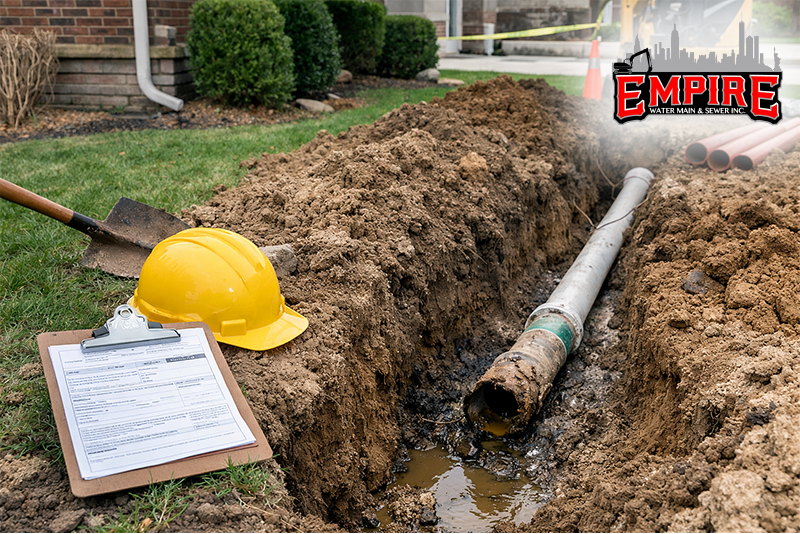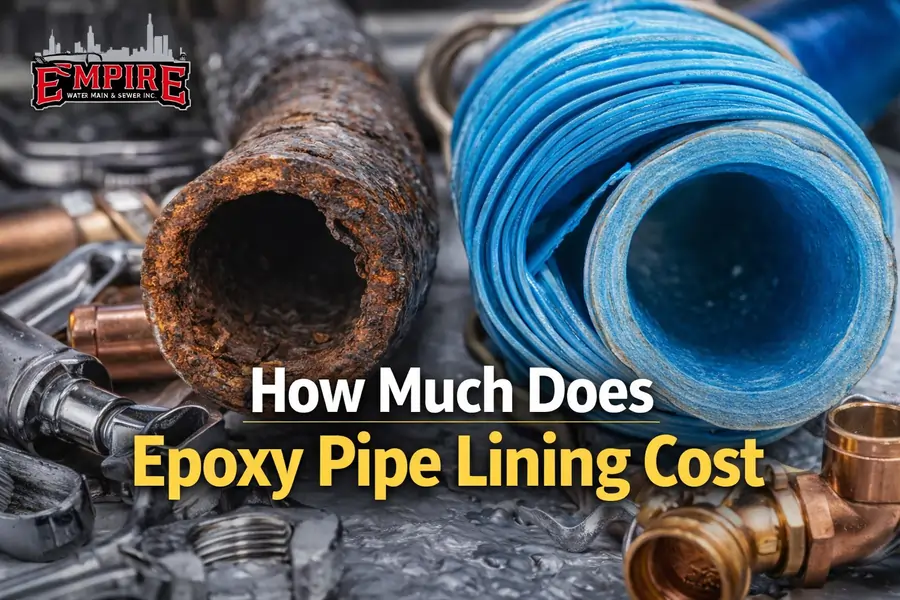
Your sewer line is failing, and your contractor just used the phrase “full excavation.” In New York City, that phrase often means tearing up your sidewalk, pulling a DEP permit, and spending weeks waiting for the city to approve restoration work. Epoxy pipe lining exists specifically to avoid all of that. But before you commit, you need to know what it actually costs and why the price varies so dramatically from one job to the next.
At Empire Water Main & Sewer Inc, we work with New York homeowners and property managers every day who want straight answers about trenchless pipe repair pricing. This guide gives you the real numbers, explains every cost driver, and helps you figure out whether epoxy lining makes financial sense for your specific situation.
Quick Answer: Epoxy pipe lining in New York typically costs between $80 and $250 per linear foot. Most residential projects run $3,000 to $8,000 total, though larger or more complex jobs can reach $15,000 or more. NYC’s higher labor rates and permit requirements push costs toward the upper end of national ranges.
What Is Epoxy Pipe Lining and How Does It Work?
Epoxy pipe lining is a trenchless repair method that coats the interior of your existing damaged pipe with a specialized epoxy resin. Once that resin cures — usually within 24 hours — it forms a seamless, smooth inner layer that effectively creates a new pipe inside the old one. No excavation. No demolition. No weeks of disruption.
The process follows a consistent sequence regardless of the contractor you hire. Technicians first run a camera through the pipe to assess damage, then clean the pipe using hydro-jetting or mechanical descaling. Once the pipe is clean and dry, the epoxy coating or CIPP (Cured-In-Place Pipe) liner is inserted and cured using heat, steam, or UV light depending on the system being used.
What makes this technology valuable for New York properties specifically is the city’s built environment. Pipes run under concrete slabs, through basement walls, beneath driveways and public sidewalks. Traditional sewer line repair means accessing the pipe — and in NYC, access usually comes with excavation. Trenchless lining does not.
Epoxy Coating vs. CIPP Lining: What’s the Difference?
These two terms are often used interchangeably, but they refer to slightly different processes. Epoxy coating sprays a thin resin layer onto the pipe’s interior walls. CIPP lining involves inserting a fabric tube saturated with epoxy resin, inflating it against the pipe walls, and curing it in place to form a rigid new pipe liner. CIPP is generally used for larger diameter and more structurally compromised pipes, while epoxy coating is common for smaller supply lines and drain pipes.
Epoxy Pipe Lining Cost Breakdown for New York Homeowners
The national average for epoxy pipe lining runs between $80 and $250 per linear foot. In New York City, expect to land toward the higher end of that range due to elevated labor costs, DEP permit requirements, and the complexity of urban infrastructure. If you are weighing this against full pipe replacement, our guide on how much it costs to replace a sewer line in New York gives you a direct comparison. Here is a realistic cost breakdown by project type:
| Project Type | Pipe Length | Estimated Cost (NYC) |
| Small sectional repair | 10–20 linear feet | $2,500 – $5,000 |
| Standard residential sewer line | 40–60 linear feet | $6,000 – $12,000 |
| Full residential drain system | 80–100 linear feet | $10,000 – $20,000 |
| Commercial building (multi-story) | 200+ linear feet | $20,000 – $50,000+ |
| Water supply line (epoxy coating) | Per unit | $3,000 – $8,000 average |
These figures include labor, materials, camera inspection, and basic pipe preparation. They do not include NYC DEP permit fees, which can add $500 to $1,500 to the total depending on scope of work.
7 Factors That Determine Your Epoxy Pipe Lining Cost
1. Linear Footage of Pipe
This is the single biggest driver of your total bill. Every additional foot of pipe requires more resin, more liner material, and more labor time. A 20-foot sectional repair is fundamentally different from lining 80 feet of sewer main. Most contractors price this as a per-foot rate plus a mobilization or minimum charge, so very short repairs may cost more per foot than longer runs.
2. Pipe Diameter
Larger pipes require significantly more epoxy resin and, in the case of CIPP, a heavier fabric liner. A 4-inch residential drain line and an 8-inch commercial sewer line are not the same job even if the footage is identical. Residential pipes typically run 2 to 6 inches in diameter. Pipes above 6 inches move into commercial pricing territory, where specialized inversion equipment and vacuum trucks are often needed.
3. Pipe Condition and Preparation Required
Before any lining can happen, the pipe must be clean. If your cast iron sewer line has significant buildup, root intrusion, or channel rot — a type of corrosion where water has etched a groove into the bottom of the pipe — it needs intensive cleaning before the epoxy will bond properly. Hydro-jetting alone can cost $300 to $600 for a residential line. Mechanical descaling or root cutting adds another $500 to $1,500 depending on severity.
Pipes that are partially collapsed, heavily offset at joints, or have sections with active infiltration may also require spot repairs before lining can proceed. These pre-lining repairs add cost but are necessary for the epoxy to perform correctly.
4. Pipe Accessibility
Accessible pipes with existing cleanouts and minimal obstructions cost less to line than pipes that require new access points, or that run beneath concrete slabs, under driveways, or inside walls. In New York City brownstones and multi-family buildings, pipe routing is rarely straightforward. Expect an accessibility premium if your system requires setting up equipment in tight basement corridors or working around existing utilities.
5. NYC Labor and Permit Costs
New York City plumbers operate under one of the highest-cost labor markets in the country. Licensed master plumber rates in NYC typically range from $150 to $300 per hour. Any work affecting your sewer connection to the city main — or any work beneath a public sidewalk — requires a DEP permit. Our team handles DEP notices and permit filings on your behalf so nothing falls through the cracks. Permit costs vary by borough and project scope but commonly run between $500 and $1,500. Failing to pull the right permits can result in violations that cost far more to resolve.
6. Camera Inspection
A reputable epoxy lining company will not give you a quote without first performing a sewer camera inspection. This step is non-negotiable — without knowing exactly what is wrong, where, and how bad, no accurate estimate is possible. Camera inspections in New York typically cost $175 to $350 for a standard residential line. Many contractors include this in the overall project quote if you proceed with the work.
7. Warranty and Material Quality
Epoxy resins are not all the same. NSF/ANSI 61-certified materials approved for potable water contact cost more than standard drain-line resins. CIPP liners rated for 50-year lifespans use heavier fiber fabric and higher-grade resins than budget alternatives. Contractors who offer 10 or 25-year warranties on their work are backing that promise with better materials. The cheapest quote is rarely the best value when you are lining pipe that will be underground for decades.
Epoxy Pipe Lining vs. Traditional Sewer Line Replacement: Real Cost Comparison
Property owners in New York frequently ask whether lining is actually cheaper than sewer line replacement outright. The answer depends heavily on how you count the costs. Here is an honest comparison:
| Cost Category | Traditional Replacement | Epoxy Pipe Lining |
| Material + labor (per foot) | $4 – $15 | $80 – $250 |
| NYC sidewalk/street restoration | $5,000 – $20,000+ | Not required |
| DEP permits and inspections | $500 – $2,000 | $500 – $1,500 (varies) |
| Disruption to property | Weeks of excavation | 1–3 days typical |
| Landscaping restoration | $1,000 – $10,000+ | Not required |
| Expected lifespan | 40 – 70 years (new pipe) | 35 – 50 years |
| Typical total project (residential) | $15,000 – $40,000+ | $5,000 – $15,000 |
Traditional pipe replacement carries a deceptively low per-foot material cost. Once you add excavation, concrete cutting, sidewalk restoration (which the NYC DEP requires you to restore to pre-existing condition), and landscape repair, the real total cost of replacement climbs quickly. Epoxy lining’s higher per-foot price often results in a lower final invoice for most residential projects.
That said, lining is not always the right answer. Pipes that are fully collapsed, severely offset at multiple joints, or that have lost structural integrity cannot be successfully lined. A thorough camera inspection by a qualified contractor is the only way to determine if your system qualifies.
Is Epoxy Pipe Lining Right for Your New York Property?
Epoxy pipe lining works well when your pipe still holds its basic shape and the interior surfaces are cleanable. Most cast iron, clay, PVC, and concrete pipes qualify. The method is particularly well-suited to New York City properties for three reasons: it avoids costly sidewalk and street restoration, it works in tight urban spaces where excavation is logistically difficult, and it completes in days rather than weeks.
Situations Where Epoxy Lining Is the Better Choice
- Cracked or leaking cast iron drain lines in brownstones or pre-war apartment buildings
- Sewer lines with root intrusion that are otherwise structurally sound
- Pipes running beneath concrete slabs or public sidewalks
- Properties where landscape or hardscape preservation matters
- Commercial buildings where extended downtime would affect tenants or operations
- Pipes experiencing corrosion or minor offset joints
Situations Where Traditional Replacement May Be Necessary
- Fully collapsed or severely crushed pipe sections
- Pipe with multiple major joint offsets that prevent liner insertion
- Pipe diameter changes or complex routing that cannot accommodate a liner
- Systems where the existing pipe material is incompatible with epoxy bonding
When lining is not viable, new sewer and water main installation is often the next step. A camera inspection tells you which path your property actually needs.
How to Get an Accurate Epoxy Pipe Lining Quote in New York
Getting a reliable estimate starts with the right information. Before any contractor can price your job accurately, they need to know exactly what they are working with. Here is what a legitimate quote process looks like:
- Sewer camera inspection — A video assessment of the pipe identifies damage type, location, and severity. No reputable company skips this step.
- Pipe measurement — The contractor determines exact linear footage and pipe diameter throughout the affected run.
- Condition assessment — Any sections requiring pre-lining repair, additional cleaning, or spot patching are identified.
- Permit review — The contractor determines which NYC DEP permits are required and factors those fees into the estimate.
- Written itemized quote — Labor, materials, inspection, permits, and any pre-work are listed separately so you understand exactly what you are paying for.
Be cautious of any contractor who provides a quote without first performing a camera inspection. Without seeing the actual condition of the pipe, no accurate estimate is possible. Quotes given over the phone based on pipe age or address alone are unreliable.
Questions to Ask Before Signing
- Is the epoxy or liner material NSF-certified for drinking water contact if applicable?
- What warranty do you offer on both materials and workmanship?
- Are all required DEP permits included in this quote?
- Will you show me camera footage before and after the lining?
- Have you done similar work in this borough or building type before?
- What happens if a section of pipe cannot be lined once the project starts?
Does Homeowners Insurance Cover Epoxy Pipe Lining in New York?
Most standard homeowners insurance policies in New York do not cover sewer line repair or replacement as part of a base policy. Sewer line coverage is typically available as an add-on endorsement or through a separate service line protection policy. Coverage limits and exclusions vary by insurer, so reviewing your specific policy documents or calling your agent before starting work is the right move.
Some NYC co-op buildings carry building-wide sewer line coverage through their master policy. If you live in a co-op or condo, check with your building’s managing agent before assuming any sewer work is entirely your financial responsibility.
Even when insurance is involved, the insurer will typically require documented damage through a camera inspection and a written estimate from a licensed contractor before authorizing repairs.
Why New York Property Owners Choose Empire Water Main & Sewer Inc
Empire Water Main & Sewer Inc has been handling sewer and water main repairs across New York City for years. We work on residential homes, brownstones, multi-family buildings, and commercial properties throughout the five boroughs. Every job starts with a camera inspection so you see exactly what you are dealing with before any work begins.
Our team holds all required NYC DEP licenses and handles permit applications on your behalf. We provide written, itemized estimates with no hidden fees. And we back our lining work with clear warranties on both materials and labor so you are protected after we leave the job site.
If you are dealing with slow drains, recurring backups, wet spots in the yard, or foul odors — those are signs that should not wait. Our emergency sewer and water main repair service is available when you cannot afford delays. For non-urgent situations, contact us to schedule a camera inspection and get an honest, itemized estimate.
Frequently Asked Questions About Epoxy Pipe Lining Costs
How much does epoxy pipe lining cost per foot in New York?
In New York City, epoxy pipe lining typically costs between $150 and $250 per linear foot for residential projects, which is toward the upper end of the national range of $80 to $250 per foot. Higher labor rates, permit requirements, and the complexity of urban infrastructure all contribute to the elevated pricing.
How long does epoxy pipe lining last?
A properly installed epoxy pipe lining system typically lasts between 35 and 50 years. Some manufacturers rate their products for up to 50 years under normal operating conditions, and accelerated laboratory testing has suggested potential lifespans even beyond that. Longevity depends on the quality of materials used, the thoroughness of pipe preparation, and the skill of the installer.
Can epoxy pipe lining fix root intrusion?
Yes, but with an important caveat. Epoxy lining can seal cracks and joints that allow roots to enter the pipe, which prevents future root intrusion in the lined section. However, roots already inside the pipe must be removed through hydro-jetting or mechanical cutting before lining begins. The lining itself does not kill or remove roots — it prevents them from re-entering through the repaired joints.
Is epoxy pipe lining cheaper than replacing the pipe?
For most residential projects in New York City, yes. Traditional sewer line replacement requires excavation, concrete cutting, sidewalk restoration (which NYC DEP mandates), and often landscaping repair. Those additional costs can push a full replacement into the $20,000 to $40,000 range or higher. Epoxy lining eliminates most of those ancillary costs, making the total project cost lower even though the per-foot labor rate is higher.
How long does epoxy pipe lining take to complete?
Most residential epoxy pipe lining projects complete in one to three days. The process itself — cleaning, lining, curing — can often be finished in a single day for straightforward jobs. More complex projects with significant pre-work, multiple access points, or longer pipe runs may take two to three days. Compare this to traditional excavation and replacement, which typically takes one to three weeks or longer in dense urban environments.
Does epoxy pipe lining require a DEP permit in New York City?
It depends on the scope and location of the work. Lining work that touches the sewer connection at the property line or that affects the public sewer system typically requires a DEP permit. Empire Water Main & Sewer Inc manages DEP permit filings and notices as part of every applicable project, so you are not left navigating city bureaucracy on your own.
Can all types of pipes be lined with epoxy?
Epoxy pipe lining works on most common pipe materials including cast iron, clay, concrete, PVC, and copper. The pipe must still hold its basic shape — fully collapsed sections cannot be lined. Pipes must also be cleanable so the epoxy bonds properly to the interior surface. A camera inspection is the only reliable way to determine if your specific system qualifies for epoxy lining.
What is the minimum pipe size for epoxy lining?
Epoxy coating methods can be applied to pipes as small as 1 to 2 inches in diameter, while CIPP lining systems typically work best on pipes between 2 and 12 inches in diameter. For smaller residential supply lines, spray-applied epoxy coating is the common method. For larger sewer mains, CIPP with a fabric liner is standard.
The Bottom Line on Epoxy Pipe Lining Costs in New York
Epoxy pipe lining is not the cheapest option per linear foot. It is, however, often the most cost-effective total solution for New York City property owners dealing with damaged sewer and drain lines. When you factor in what you avoid — excavation costs, sidewalk restoration fees, weeks of disruption, and landscape repair — the numbers tend to favor lining for most residential and commercial applications.
The key variables are pipe condition, diameter, length, and accessibility. A camera inspection is the only way to get from general pricing ranges to an actual number for your property. If your pipes are corroded, cracked, or leaking and still hold their basic shape, epoxy lining is worth a serious look.
Empire Water Main & Sewer Inc serves homeowners and property managers throughout New York City. Contact our team to schedule a sewer camera inspection and get an honest, itemized estimate for your pipe lining project. We handle all permit requirements, explain every line item, and back our work with clear warranties.